The Runner Machine
The system behind every six-figure desk
Six modules. A 50-page toolkit. The exact system for niche, performance, qualification and client engagement. Built by a contract recruiter, for contract recruiters
What's inside - Six modules
- Define your universe - Build your niche right
- The performance framework - The numbers behind every successful desk
- Contractor engagement - build better relationships and get more leads
- The BD routes to market - onboard more clients
- Job qualification - Make placements whilst picking up jobs
- Turn one runner into two - Scale your book fast
There are a handful of agencies who genuinely know how to do contract recruitment well. Even fewer coaches who actually teach it properly. Most of what's out there is permanent-desk thinking with “contract” bolted on the front.
The Runner Machine exists because good BDs keep working B-grade jobs, under-serving contractors, and leaving placements on the table. Not because they're bad at the job, but because nobody ever taught them the actual mechanics.
The problem
Most desks are running on instinct, not a system. That shows up in ways that are easy to miss until they've already cost you:
- Niche wrong at the start, and you're growing against the grain for the rest of your career in that market not slowed down, actually working uphill.
- A contractor call ends with “I'll be in touch” instead of a controlled forward action. The relationship never blossoms because nobody stayed in charge of it.
- 85% of clients only buy after 6+ points of contact, but 75% of recruiters give up before attempt 4 most of the BD opportunity in this industry is sitting in that gap, uncollected.
- Chasing every “maybe” job because saying no feels like leaving money on the table, when a five-question filter would have told you inside the qualification call.
The contract toolkit
The course teaches you the thinking. The toolkit is what's open in front of you when you're actually running the call.
A 50-page reference — the exact scripts, worksheets, and frameworks from every module, laid out so you're not trying to remember five questions from memory while a client's talking.
The toolkit mirrors the course chapter for chapter: Ch.1 The Contract Universe (niche), Ch.2 The Performance Framework, Ch.3 Engaging the Contractor, Ch.4 BD Routes to Market, Ch.5 Contract Job Qualification (ADIEU), Ch.6 Turn Every Placement Into Two — each with the scripts, worksheets, and scorecards to match.
Included automatically in Self-Study + Toolkit, Group Implementation, and Private Implementation. Never sold on its own.
The runner machine - 6 module breakdown
Module 1 — Define Your Universe (Niche)
Get your niche wrong at the start and you don't just slow yourself down, you let the horse bolt. Your niche is defined by three parameters: job titles (max three), a single client geography, and the organisational sweet spot where you actually trade best.
You'll build a Candidate ICP and Client ICP, then score your universe against a Niche Readiness Score covering TAM size, average day rate, and weekly GP potential, so you know whether you're building a desk worth three years of your career, or whether to go back to the drawing board.
Module 2 — The Performance Framework
The number logic behind every desk that consistently hits target, made visible, so you can build it on purpose instead of discovering it by accident.
Four layers, in strict order: Non-Negotiables → Inputs → KPIs → Target. Most desks that miss target aren't failing at the target: they're failing two or three layers below it, and nobody's looking there.
The weekly KPI benchmark: 1-5-3. One new A-grade job. Five CVs sold into it. Three first interviews.
Module 3 — Engaging the Contractor
Every contractor call has a job to do beyond the conversation itself. Four non-negotiables on every single call: confirm they're an ICP, get their end date, mine market intelligence (current manager, previous manager, referrals, interview leads), and control the forward action: never let a contractor's vague “I'll be in touch” close the call.
You'll get the exact four-part intro script, the fixed call structure, and the specific questions to ask depending on whether a contractor's renewing or finishing, including how to go in for a reference without it feeling like an ask.
Module 4 — BD Routes to Market
BD isn't a talent, it's a skill set. This module breaks it into four learnable approaches: the BD Intro call, the Lead Chase call, the Reference call, and the Reverse Headhunt.
85% of clients buy from a supplier only after 6+ points of contact, yet only 25% of recruiters ever push past 3 attempts before giving up. That gap is where most of the opportunity in BD actually sits.
You'll get the four-part call intro, the “six deadly sins” of sales questions to avoid, three question types that actually move a client toward a pitch, and the exact pitch structures including the two-time close (“he could do 10am tomorrow or 1pm Friday — which works best for you?”).
Module 5 — World-Class Job Qualification
The ADIEU framework — five questions that tell you inside the first call whether a job's actually winnable:
- Autonomy — can it just be you and I on this? Do I have exclusivity?
- Demand — how many do you need in the next six months, not just this one?
- Importance — why does this role actually matter?
- Existence — does the contractor you need actually exist, at that rate, in that location?
- Urgency — what happens if you don't get someone started by X date?
Adieu — French for goodbye. Get all five, and you can say goodbye to working B-grade jobs.
Module 6 — Turn Every Runner Into Two
Most desks treat a placement as a finish line. The best desks treat it as the start of a second one:
- Download the contractor — get previous line manager, previous interview, and referral info while goodwill's highest
- The weekly service call — an SLA, not a favour: head off site problems, find out what's really happening
- Face to face every 13 weeks — with your contractor and the whole team, including other agencies' contractors, include as many stakeholders as you can as well.
- The bi-weekly client call — Uncover any problems and loads of market intelligence.
- The exit interview — every time someone leaves, find out what's next
What agency leader's say about working with Trevor

Luke McCluskey - CEO Circle Partners
"Trevor's coaching has been absolutely instrumental in the growth of our contract book at Circle."
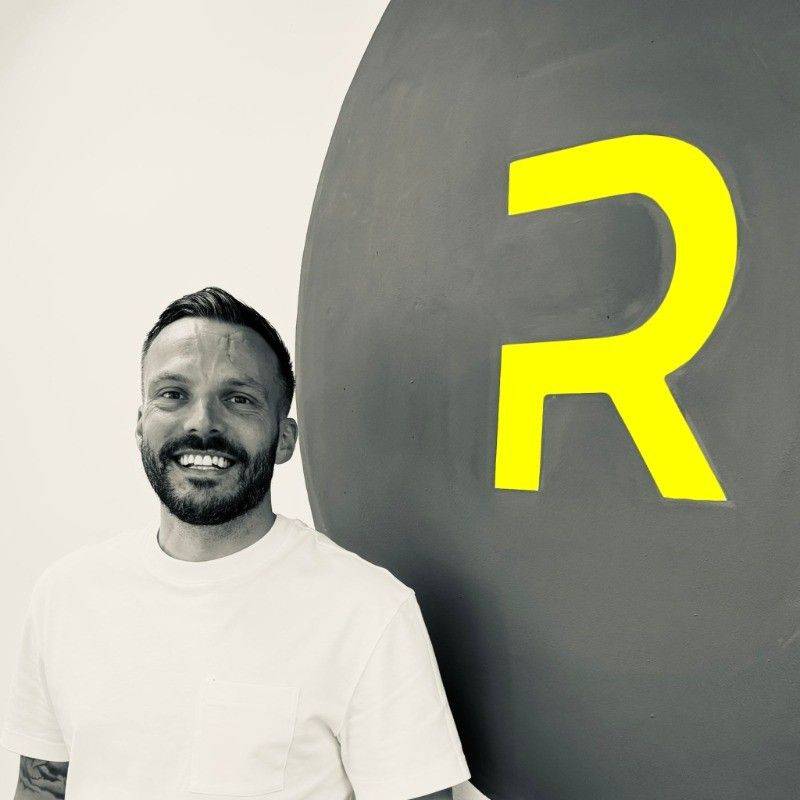
Ross Benham - Managing Director - ReevR
"When I started ReevR, Trevor was the only contract coach that I wanted. This has turned out to be a great decision."

The track record
Trevor Pinder - 30 years in recruitment. Every level, from rookie to investor.
Trevor has worked with over 100 agencies, with a 97% return rate. He's trained more than 3,000 recruiters and 500 leaders.
He personally built a £1m contract book, then led a team that grew a 360 desk from a standing start to £30m in annual revenue. Three contract-only businesses he's coached this year have posted record annual performance.
Runner Machine is that experience, built into six modules — not theory borrowed from permanent recruitment, but what's actually worked across three decades of running and building contract desks.
Get instant accessTwo ways in
If you're an individual recruiter (Self-Study / Self-Study + Toolkit)
You get the full system at your own pace — niche, the Performance Framework, contractor engagement, BD routes to market, ADIEU qualification, and the referral system, plus the toolkit scripts you'll actually use on your next call. This is about your own billings, your own desk, your own control over how good you get at this job. Nobody has to sign off on it, you just start.
If you're an agency owner (Group / Private Implementation)
This isn't training your team watches once and half-remembers. It's implementation — 6 live calls where the system gets installed against your actual desk, your actual jobs, your actual team, with someone accountable for making sure it sticks. Group Implementation puts your people in the room with other serious agencies working the same system. Private Implementation does the same thing, but privately — no other agency's recruiters hearing your team's problems, and the calls built entirely around your desk, not a generic curriculum.
Choose your tier
Self Study + Toolkit
£199 + VAT
Study at your own pace
- The full pre recorded course - 70 + videos
- Contract toolkit
Group Implementation
£329 + VAT per person
Multi agency implementation
- The full pre recorded course - 70 + videos
- Contract toolkit
- 6 live group implementation calls
- Dedicated WhatsApp group
Private Implementation 5 to 14+ seats
£449 per person + VAT
Single agency implementation - ONLY 3 AVAILABLE
- The full pre recorded course - 70 + videos
- Contract toolkit
- 6 live single agency implementation calls
- Dedicated WhatsApp group
15+ seats? These get a lower per-seat rate — get in touch and we'll sort pricing directly
FAQ's
Is this only for agencies who've already niched down?
What if I'm not doing pure contract recruitment yet?
How much time does this take?
What's your refund policy?
What's the difference between Group and Private Implementation?
The final word
There's a handful of agencies who do this properly. Fewer coaches who actually teach it. Runner Machine exists so that gap closes for you — not because you got lucky with who trained you, but because you had the system in front of you: niche, performance, contractor engagement, BD, qualification, referrals. All six pieces, not just the ones that make a good LinkedIn post.
Six modules. A fifty-page toolkit you'll actually use on the call, not just read once.
Pick the tier that fits how you want to build it — alone, alongside five other serious agencies, or privately with just your desk.
Choose your tier